
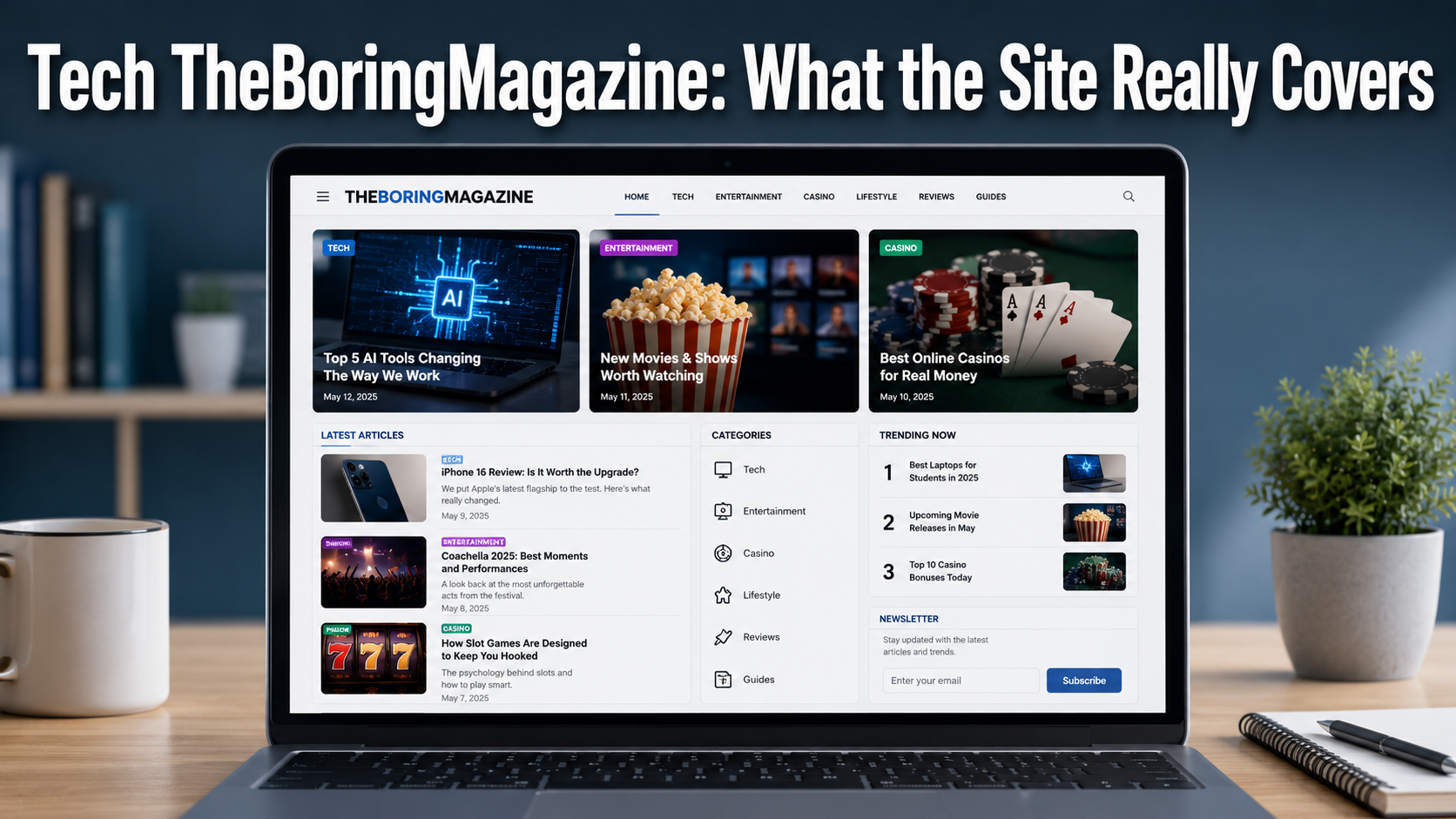
Searching for tech theboringmagazine tends to turn up a surprising range of descriptions. Some articles frame it as a specialized publication dedicated to legacy infrastructure and overlooked engineering topics, others describe it as a lighthearted, beginner-friendly gadget blog, and a few present it as a serious enterprise technology resource with structured review methodology. Given how differently the same name gets described across the internet, it is worth looking directly at the actual site to understand what tech theboringmagazine really is.
This article is based on a direct review of theboringmagazine.com itself, rather than secondhand summaries that may not reflect the site’s real content. Understanding what the platform actually publishes, how its technology category fits into its broader output, and what readers should reasonably expect from it will help anyone searching this term get a more accurate picture than the conflicting descriptions circulating elsewhere.
Taking this approach also matters for a broader reason. Whenever a search term surfaces a scattered mix of descriptions, the safest path is always to check the primary source directly rather than trusting whichever summary appears first or reads most confidently. That principle guided every claim made in the sections that follow.
Contents
- 1 What Tech TheBoringMagazine Actually Refers To
- 2 Inside the IT and Technology Category
- 3 Why Multiple Conflicting Origin Stories Exist Online
- 4 The Site’s Broader Content Mix Beyond Tech
- 5 Self-Referential Content and Why So Much of It Exists
- 6 Related Search Terms and What They Actually Point To
- 7 Affiliate and Advertising Patterns Worth Knowing
- 8 How This Reflects a Broader Content Trend
- 9 What Readers Should Reasonably Expect From This Site
What Tech TheBoringMagazine Actually Refers To
TheBoringMagazine.com is a general-interest content website organized around three main categories: Entertainment, Biographies, and IT and Technology. The tech theboringmagazine phrase most accurately refers to this IT and Technology section specifically, which sits alongside celebrity net worth features and pop culture coverage rather than functioning as a standalone technology publication in its own right.
This structure matters because it explains why search results for tech theboringmagazine can feel inconsistent with what a dedicated tech outlet typically looks like. The technology category here is one branch of a much broader site that publishes on subjects ranging from music and movies to celebrity biographies, rather than a niche publication built exclusively around deep technical analysis.
Readers arriving with expectations shaped by specialized tech journalism outlets may find the actual tone and depth here quite different. The site’s own homepage describes its mission as making entertainment, biographies, and technology accessible in one place, which sets a lifestyle-magazine tone rather than the investigative or highly technical framing that some secondhand descriptions elsewhere suggest.
Inside the IT and Technology Category
Browsing the actual IT and Technology section on theboringmagazine.com reveals a mix of genuinely tech-adjacent pieces alongside content that stretches the category fairly loosely. Articles touch on digital marketing trends, workplace productivity tools, cybersecurity career trends, and AI-related topics, which aligns reasonably well with what a general audience might expect from a technology section on a mainstream lifestyle site.
At the same time, a considerable portion of the content filed under this category covers subjects with only a loose connection to technology in the traditional sense, including pieces on online casinos, crypto trading desks, and various consumer topics that happen to touch on digital platforms. This blending is common on sites built primarily around search-driven content strategies, where a technology label gets applied broadly to capture traffic from multiple related search terms.
For readers specifically interested in hands-on product reviews, deep technical explainers, or rigorous benchmark testing, the IT and Technology category here functions more as a broad digital-life section than a specialized review authority. It can still offer accessible starting points on trending topics, but readers seeking authoritative technical depth may want to treat it as one input among several rather than a primary technical reference.
Why Multiple Conflicting Origin Stories Exist Online
One of the more unusual patterns surrounding this keyword is the sheer number of contradictory founding stories attached to it across different websites. Some sources describe a publication founded in 2018 by former tech journalists focused on legacy infrastructure and overlooked engineering topics, complete with detailed anecdotes about investigating why airports still use older printer technology. Others describe an entirely different origin centered on humor, pop culture crossover, and democratizing tech knowledge for casual readers.
Neither of these detailed founding narratives appears on the actual theboringmagazine.com site itself, which offers a much simpler self-description focused on making entertainment, biographies, and technology accessible without claiming a specific founding year or detailed backstory involving former journalists. This mismatch strongly suggests that at least some of the content describing tech theboringmagazine online was generated independently of the real site, possibly by content creators targeting the keyword without directly verifying the source.
This pattern is not unique to this particular search term. It reflects a broader trend where search-optimized content gets produced quickly around trending phrases, sometimes inventing plausible-sounding details rather than confirming them against the actual subject. Readers encountering detailed, confident claims about a website’s history should treat those claims with some skepticism unless they can verify them directly against the site’s own about page or contact information. A simple habit of checking the primary source before accepting a secondhand founding story would resolve most of this confusion in a matter of minutes.
The Site’s Broader Content Mix Beyond Tech
Looking at theboringmagazine.com’s full output makes clear that technology represents only one part of a much wider content strategy. The site publishes extensively on entertainment topics, celebrity net worth estimates, and biographical features, alongside a notable volume of content related to online casinos, gambling platforms, and betting-related topics that appear throughout multiple categories rather than staying confined to a single section.
This broad content spread is a common pattern among sites built around monetization through affiliate partnerships across several verticals simultaneously, rather than sites built around a single area of genuine editorial expertise. When a site publishes with similar frequency on cybersecurity trends, casino bonus mechanics, personal injury attorneys, and pasture-raised egg markets, it signals a content operation optimized for capturing varied search traffic rather than a focused subject-matter authority.
None of this means the individual articles are necessarily inaccurate, but it does mean readers should calibrate their expectations accordingly. A site covering this many unrelated topics at volume is unlikely to bring the same depth of specialized expertise to any single subject that a dedicated, narrowly focused publication typically would.
Self-Referential Content and Why So Much of It Exists
A particularly notable feature of theboringmagazine.com is the unusually high volume of articles written about its own name and variations of it, including pieces titled around phrases like tech theboringmagazine, theboringmagazine IT, net worth theboringmagazine, and several near-duplicate variations covering similar ground with slightly different keyword phrasing. This is a distinctive pattern that goes beyond typical about-page content.
This kind of self-referential content cluster typically serves a search engine optimization purpose, capturing traffic from anyone searching variations of the site’s own brand name alongside descriptive terms like tech, IT, or net worth. Because these searches often come from curious readers trying to verify what a site is or whether it is trustworthy, producing multiple articles addressing slightly different phrasings of the same underlying question can capture a meaningful amount of that curiosity-driven traffic.
For readers, recognizing this pattern is useful context. Finding several articles from the same domain describing itself in flattering, consistent terms is a form of content marketing rather than independent verification, and it should not be treated as equivalent to third-party validation of the site’s authority or trustworthiness.
Related Search Terms and What They Actually Point To
Beyond tech theboringmagazine itself, several closely related phrases circulate in search results, including theboringmagazine IT, technologies theboringmagazine, and theboringmagazine tech. All of these variations point back to the same underlying source: the IT and Technology category of theboringmagazine.com, described using slightly different word orderings and combinations rather than referring to genuinely separate products or platforms.
This kind of keyword variation is a standard search engine optimization practice, where a site or the content written about it targets multiple phrasings of essentially the same query to capture a wider range of search traffic. Readers who notice nearly identical articles published under these different title variations, sometimes even on the same domain, are seeing this strategy play out directly rather than encountering meaningfully different information sources.
Recognizing that these variations describe the same underlying section, rather than distinct technology resources worth researching separately, saves readers time and helps them avoid the false impression that multiple independent sources are confirming the same claims. In reality, much of this repeated phrasing traces back to a single site’s content strategy rather than independent corroboration from unrelated publications.
Affiliate and Advertising Patterns Worth Knowing
TheBoringMagazine.com displays clear signs of an advertising and affiliate-driven monetization model, including a dedicated recommendation section linking out to online casino platforms, betting sites, and gambling-adjacent services. This kind of cross-promotion is common among content sites that generate revenue primarily through affiliate commissions rather than subscriptions or direct advertising sales.
This does not automatically make the technology content unreliable, but it does mean readers evaluating any specific recommendation, particularly around gambling, crypto, or financial products mentioned across the site, should apply extra scrutiny regarding potential conflicts of interest. Sites with heavy affiliate ties to particular industries have a built-in incentive to present those industries favorably, which is worth factoring into how much weight any single recommendation carries.
Readers interested purely in the technology content can reasonably treat it separately from the site’s gambling-adjacent material, but should stay aware that the same underlying monetization incentives shape the site’s overall editorial choices, including which topics receive coverage and how enthusiastically certain products or services get recommended. This is not a criticism unique to this one site, since many general-interest content platforms rely on similar affiliate structures, but it is a useful piece of context for calibrating trust in any specific recommendation found there.
How This Reflects a Broader Content Trend
The pattern seen with tech theboringmagazine, where a real but broad, monetization-driven site attracts numerous secondhand descriptions that range from mildly exaggerated to significantly fabricated, reflects a wider trend across online content. As search-optimized writing has become faster and cheaper to produce at scale, more content gets built around popular search terms without always confirming the underlying facts against the original source.
This trend makes basic verification habits increasingly valuable for readers trying to understand any unfamiliar site, tool, or brand name. Checking a site’s own about page, looking at its actual published content rather than relying on third-party summaries, and noticing patterns like an unusual volume of self-referential articles are all practical ways to build a more accurate picture than search results alone might provide.
Readers who apply this kind of scrutiny consistently will find it useful well beyond this specific example, since similar patterns of conflicting, sometimes fabricated descriptions appear around many lesser-known websites, tools, and digital platforms as search-driven content production continues to expand.
What Readers Should Reasonably Expect From This Site
Approached with accurate expectations, theboringmagazine.com functions as a broad, lifestyle-oriented content site with an accessible technology section rather than a specialized, deeply technical publication. Readers looking for approachable, easy-to-understand takes on trending tech topics may find some genuinely useful pieces within its IT and Technology category, particularly on subjects like digital marketing trends or general workplace technology.
For readers who need deeper technical accuracy, independent product testing, or specialized industry analysis, supplementing this site with more narrowly focused technology publications and verified independent reviews will provide a more complete and reliable picture. Treating any single broad, multi-topic site as a comprehensive technology authority risks missing the specialized depth that dedicated outlets typically offer.
Ultimately, the most accurate way to understand tech theboringmagazine is as one section within a wide-ranging, affiliate-supported content platform rather than a standalone technology institution with the specific founding history or editorial focus that some secondhand descriptions have claimed. Readers who keep that context in mind will get more genuine value from the site while avoiding the confusion that conflicting online descriptions have created around its actual identity. That small amount of upfront verification, checking the primary source rather than accepting the first confident-sounding summary, remains the most reliable habit for navigating any similarly ambiguous search term in the future.